Pages

Showing posts with label Pediatric. Show all posts

Thursday, December 08, 2011

My patient is allergic to eggs, can i use propofol? A case report and review

an interesting case report by Dr. Jamal Tashkandi

Rather than other drugs, propofol is more likely to be used for induction of anesthesia to cause an allergic reaction. Propofol is becoming the most common intravenous agent used for induction as well as maintenance of anaesthesia. Allergy to propofol is rarely reported. We present a case of 4–year-old boy presented for elective adenotonsillectomy with past medical history of eczema and multiple allergies to food. He developed what seems to be an allergic reaction to propofol. We concluded that anaesthetists should be alerted when using propofol in patients with history of atopy or several drug allergies. Current evidence suggests that egg allergic patients are not more likely to develop anaphylaxis when exposed to propofol. If reactions to drugs occurred, it is always advisable to ascertain the exact allergen in each individual case before deciding causality. Serum tryptase, skin prick, intradermal testing, or serologic testing should be done to confirm the diagnosis of an anaphylactic reaction.

Thursday, January 06, 2011

Correct Endotracheal Tube (ETT) placement: the 20/22 rule


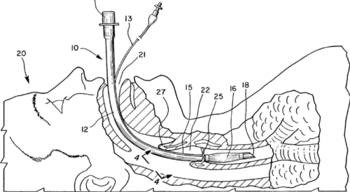
Endotracheal tube insertion depth, to 20 cm in women and 22 cm in men, is more reliable than auscultation for excluding inadvertent endobronchial intubation, especially if the clinician is inexperienced, research shows.
“Tube depth seems to be almost independent of the user’s experience and can be used by clinicians even at the beginning of their training with a high sensitivity and specificity,” Christian Sitzwohl (Medical University of Vienna General Hospital, Austria) and team write in the BMJ.
With auscultation, in contrast, 15% of endobronchial intubations were missed by experienced anesthesiologists, and 55% were missed by first-year anesthesiology residents.
“The hierarchy of the methods used to assess the correct insertion depth should be changed and clinicians should rely more on depth insertion than on auscultation,” say the researchers.
The 164 patients who participated in the study had an endotracheal tube positioned correctly (2.5–4.0 cm above the carina) or incorrectly (in the right mainstem bronchus) by an anesthesiologist using a fibreoptic bronchoscope.
The position of the tube was then independently assessed, using one of three different methods, by an experienced anesthesiologist with at least 2 years of training, and a first-year resident – 32 of the former and 22 of the latter participated in the study.
Overall, auscultation was 65% sensitive and 93% specific for exclusion of endobronchial intubation, whereas tube depth (to 20 cm in women and 22 cm in men) was 88% sensitive and 98% specific. Observation and palpation of symmetrical chest movements was 43% sensitive and 90% specific.
Combining all three techniques had a sensitivity of 100% and a specificity of 95%.
Clinician experience did not significantly influence the chances of a correct diagnosis when tube depth was used as a guide, but being experienced improved the likelihood of a correct diagnosis 10-fold with auscultation and 4.5-fold with observation.
However, the team notes that even experienced clinicians may struggle with auscultation in emergency situations, which often involve patients with underlying respiratory pathology.
Sitzwohl et al observe that the rule of inserting tubes to a depth of 21 cm in women and 23 cm in men (the 21/23 rule) is already in use, but say that following this would have resulted in 20% of women and 18% of men having the tube inserted nearer to the carina than recommended.
Following a 20/22 rule would reduce these rates to 9% and 0%, respectively, they say.

Sitzwohl C, Langheinrich A, Schober A, et al. Endobronchial intubation detected by insertion depth of endotracheal tube, bilateral auscultation, or observation of chest movements: randomised trial. BMJ 2010; 341: c5943.

Tube depth best guide to rule out endobronchial intubation : AnesthesiaNow - Your Trusted Source for Anesthesia Information.

Tuesday, November 09, 2010

Extraglottis Devices: LMA Classical, Proseal LMA and Combitube

A major responsibility of the anaesthesiologist is to provide adequate ventilaion to the patient. The most vital element in providing functional respiration is the airway. Management of the airway has come a long way since the development of endotracheal intubation by Macewen in 1880 to present day use of modern and sophisticated devices. The wide variety of airway armamentarium available today may broadly be classified as intraglottic and extraglottic airway devices, which are employed to protect the airway in both elective as well as emergency situations. New extraglottic airway devices have also been described at a rate of one per year for the last twenty five years, increasing to two per year since the turn of the century.

Monday, August 16, 2010

Pediatric Epidural with Catheter Placement

There is considerable controversy about placing these catheters after general anesthesia, and a retrospective review of this issue (no neurologic complications in 4298 patients undergoing lumbar epidural catheter placement while under general anesthesia for thoracic surgery at the Mayo Clinic) challenges the old assumption that the risks are greater [Horlocker et. al. Anesth Analg 1547: 96, 2003], as does the practice of placing epidurals in asleep children [Krane et. al. Reg Anesth Pain Med 23: 433, 1998]. That said, most do not place these in unconscious patients for a variety of reasons [Rosenquist et. al. Anesth Analg 96: 1545, 2003]